Sara Barton Biography
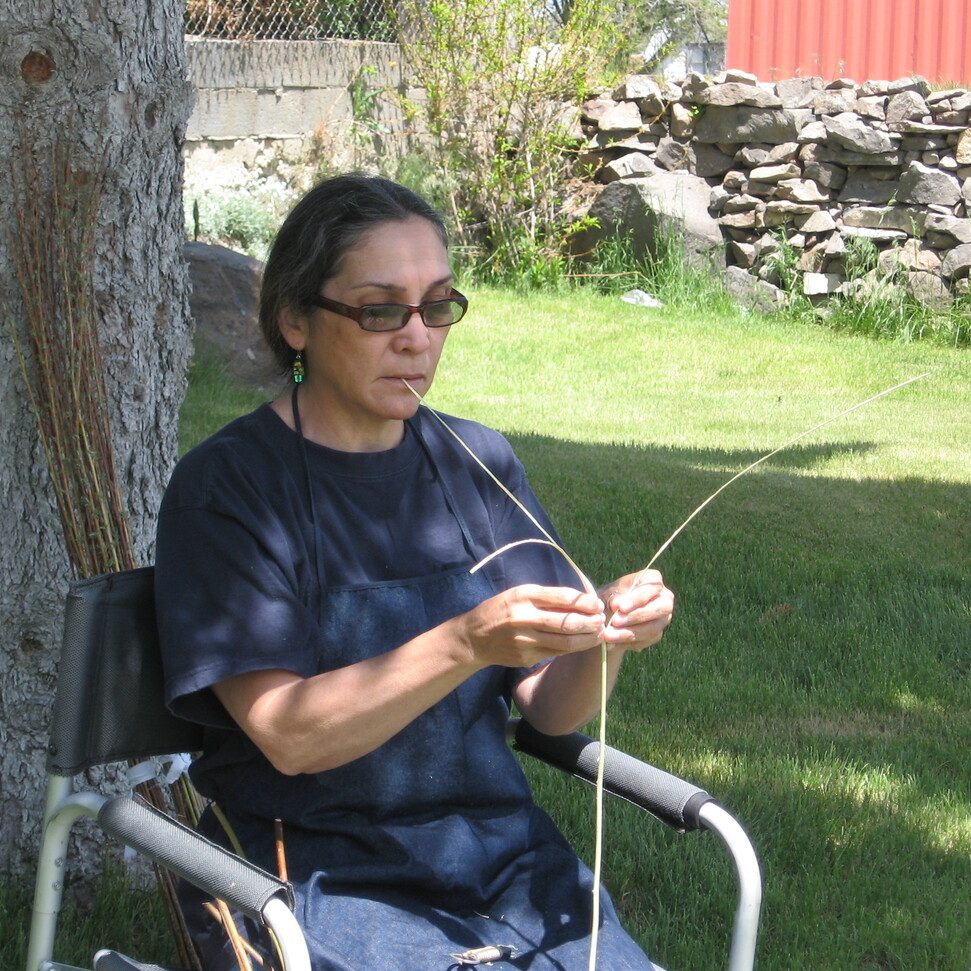
I am Sara Barton of the Yosemite Miwuk and Mono Lake Paiute First Nations, currently residing in the high desert sagebrush country of far eastern Oregon. I am a weaver and traditional artist, and I have been teaching cultural and traditional ways for over forty years. For the past twenty years, I have been deeply engaged in the art of basket making and related skills. I am fascinated with basketry of all types and equally passionate about teaching the skills and traditions from which they come.
Willow Whisperings
I was born in Yosemite Valley, where I learned from my people a profound reverence for Mother Earth and the Miwuk/Paiute way of life. My spiritual journey began in 1985 when I found myself sitting on a large, flat granite rock in a creek, wondering how I would ever break free from addiction to alcohol and drugs. My mother named me “Ho-een-a” (Dove), for the gentle bird that flies quietly through our lives bringing peace and love—but I did not feel anything like a dove.
As I sat in misery, quiet voices began emanating from the surrounding willows: “Learn about your culture,” they whispered. Shortly thereafter, I came across the book Miwuk Material Culture, which led me to ask my elders about plants and willow basket making. Hearing voices made me question my sanity, so I sought counseling at a center for Native people. I was reassured: I was not insane—I was hearing the voices of my ancestors.
Honoring those voices, I began participating in traditional cultural and spiritual ceremonies. This helped me so profoundly that I felt called to help others. I earned a certificate in Drug and Alcohol Counseling and developed a program to help Native youth build self-esteem.
Learning the Old Ways
In 1986 and 1987, I participated in a living history exhibit portraying the 1870s Miwuk/Paiute lifestyle in Yosemite Valley in conjunction with the Yosemite Park Museum. This marked the beginning of my formal education in traditional ways.
Master basket maker Julia Parker mentored me in basketry, cordage-making from dogbane, and the use of deer antler and bone tools. She also taught me shell adornment techniques and traditional food preparation, including acorns, berries, plants, and herbs.
I began traveling to gatherings to sell jewelry I created, participating in powwows, cultural gatherings, and shows across the western United States and Canada for ten years. Through these experiences, I built connections and gained exposure to diverse expressions of traditional arts and culture.
A Passion for Basketry
After settling in Burns, Oregon, I continued developing my basket-making skills as an apprentice to master basket maker Minerva Soucie of the Burns Paiute Tribe. She taught me the uses of willow, tule, and cattails, as well as how to create cradleboards for infants and dolls and a variety of baskets. I apprenticed with her for six years until her passing in 2012. During this time, I also began participating in basketry workshops with other tribes, particularly in Washington and Idaho, eventually stepping into teaching myself.
I also learned from Burns Paiute elder Rena Adams Beers, who was in her nineties at the time. Her mastery of the boat-style cradleboard was extraordinary. After earning her trust, she graciously agreed to teach me.
Part of my work includes learning how and where to gather and prepare natural materials. This requires understanding environmental conditions, proper timing, and sacred, respectful harvesting practices. Each material requires unique preparation skills.
Both Minerva and Rena emphasized the importance of prayer and positive intention in every stitch. Cradleboards are complex creations requiring many techniques and months of work. Using their teachings, I have completed ten baby cradleboards, many doll cradleboards, and numerous other baskets.
Growing My Skills
Recently, I have been exploring the nearly lost art of net making. I traveled to Fallon, Nevada, to study with Donna Cossett and have continued refining my skills through ongoing research and practice. To preserve this important tradition, I now teach net making in communities where the knowledge has been lost.
I continue expanding my knowledge through research, museum visits, networking, and travel. My dedication to traditional arts earned me recognition as a featured artist by the Oregon Folklife Network, which promotes awareness of cultural heritage and traditional arts throughout Oregon.
Teaching Makes My Heart Sing
While basketry is my passion, teaching has become my life’s purpose. I am as devoted to sharing knowledge as I am to practicing the skills themselves. My experience in living history demonstrations showed me that people are deeply hungry for this knowledge.
These traditional skills teach more than craftsmanship—they foster patience, persistence, problem-solving, self-confidence, and healing. I witness firsthand how creating meaningful objects helps students grow emotionally and mentally.
Students in my classes often form strong connections, sharing personal experiences and building a sense of belonging and community. This is especially important in a time when many feel isolated or disconnected.
Through teaching and demonstrations, including my participation in the annual Archaeology and Culture Keepers Road Show, I strive to share the wisdom of our elders and promote well-being, connection, and cultural understanding.
Going Forward
Today, I continue my spiritual growth by integrating meditation, crystals, singing bowls, and vibrational healing with traditional practices. I lead women’s sweat lodges and circles, helping participants reconnect with Mother Earth and their inner selves.